Skip to content
MaritimeTest

Handling and Storage of Hazardous Substances

Mintra 5 questions

Study guide

Download PDF

Hazardous substances can poison, burn, or blow up, and they often give no warning until it is too late. This guide covers the safety data sheet, how substances enter the body, the hazard classes and the control hierarchy.[1][2]

Safety Data Sheets (SDS)

Safety Data Sheets provide detailed information on substances that have the potential to cause harm to people or the environment. Precautions that help control the risks of working with hazardous substances include storing chemicals according to the SDS, keeping only the minimum quantity of substance necessary, and ensuring employees are properly trained in the storage and handling of hazardous substances.

How substances enter the body

Hazardous substances can enter the body in four ways: inhalation, absorption, ingestion, and contact with the eyes.

Hazard classes

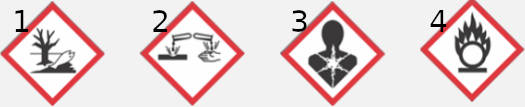
Common hazard classes shown on labels and data sheets include: dangerous to the environment; corrosive; long-term (chronic) health hazards; and oxidising.

The control hierarchy

Choose controls in this order, from most to least preferred: 1) eliminate; 2) substitute; 3) enclose; 4) engineering controls; 5) procedural controls; 6) personal protective equipment. PPE is the last line of defence — the least preferred option, used only after the higher controls have been considered.

Key facts to remember

  • SDS give detailed information on substances harmful to people or the environment.
  • Precautions: store per SDS, keep minimum quantities, train employees.
  • Entry routes: inhalation, absorption, ingestion, eye contact.
  • Hazard classes: dangerous to the environment, corrosive, long-term health hazards, oxidising.
  • Control hierarchy: eliminate → substitute → enclose → engineering → procedural → PPE.

Sources

  1. Control of Substances Hazardous to Health (COSHH) Regulations 2002 (UK) — assessment and control of hazardous substances.
  2. IMO/UN Globally Harmonized System (GHS/CLP) for hazard classification and labelling, as used with the IMDG Code for dangerous goods.

Compiled from the sources above and cross-checked against the official documents. Published by the MaritimeTest editorial team.

First 4 of 5 questions — with answers

The correct answer is marked. Unlock the rest to study the whole test, online or offline.

  1. Question 1

    Which of the following are precautions that should be implemented to help to control any risks from working with hazardous substances?
    • Storing chemicals according to the SDS.
    • Keeping only the minimum quantity of substance necessary.
    • Ensuring employees are properly trained in the storage and handling of hazardous substances.
    • Storing compatible substances separately.

  2. Question 2

    Safety Data Sheets, often referred to as SDS, provide detailed information on substances that have the potential to cause harm to people or the environment.
    • True.
    • False.
  3. Question 3

    In which ways hazardous substances can enter the body?
    In which ways hazardous substances can enter the body?
    • 1. Inhalation; 2. Absorption; 3. Ingestion; 4. Contact with eyes.
    • 1. Absorption; 2. Inhalation; 3. Ingestion; 4. Contact with eyes.
    • 1. Absorption; 2. Inhalation; 3. Contact with eyes; 4. Inhalation.
  4. Question 4

    Select the answer which is correct:
    Select the answer which is correct:
    • 1. Dangerous to the Environment; 2. Corrosive; 3. Long term health hazards; 4. Oxidising.
    • 1. Dangerous to the Environment; 2. Oxidising; 3. Long term health hazards; 4. Corrosive.
    • 1. Dangerous to the Environment; 2. Long term health hazards; 3. Oxidising; 4. Corrosive.

Preview — 4 of 5 questions

You are seeing the first 4 questions with answers. Unlock the remaining 1 to study the whole test — online or offline.

Related Mintra tests