Skip to content
MaritimeTest

Navigation (NA)

CES Deck Operational for 3rd officer 160 questions

Also studied by: CES test for deck cadets

First 5 of 160 questions — with answers

The correct answer is marked. Unlock the rest to study the whole test, online or offline.

  1. Question 1

    Code: CWGL What do the shapes that this vessel is displaying tell us about her?
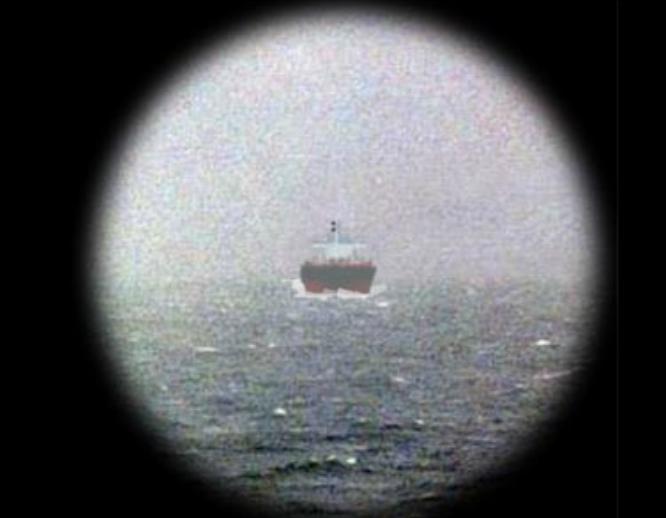
    Code: CWGL What do the shapes that this vessel is displaying tell us about her?
    • That she is not under command.
    • That she is constrained by her draught.
    • That she is engaged in towing.
    • That she is restricted in her ability to manoeuvre.
  2. Question 2

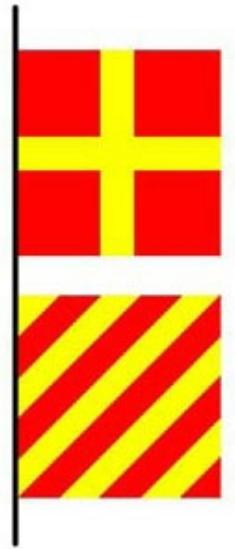
    Code: DPTB You are proceeding up a river, with berths on both banks. You see this flag hoist on a vessel moored on a berth ahead. What does it mean?
    Code: DPTB You are proceeding up a river, with berths on both banks. You see this flag hoist on a vessel moored on a ber
    • I am about to depart the berth.
    • My engine is disabled.
    • You should proceed at slow speed when passing me.
    • Caution! I have an anchor down.
  3. Question 3

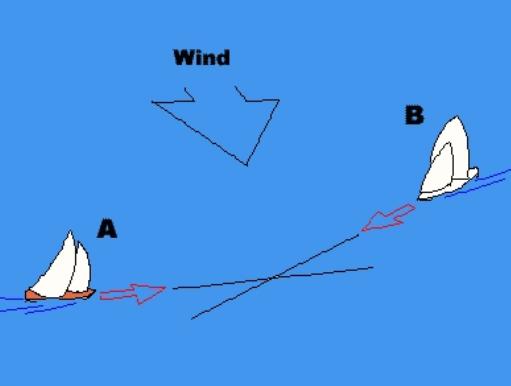
    Code: GLIP Rule 12 of the International Collision Regulations prescribes the action to be taken by a sailing vessel when meeting another sailing vessel. This depends on the direction of the wind relative to each vessel. In the situation shown here, which sailing vessel (A or B) must keep out of the way of the other?
    Code: GLIP Rule 12 of the International Collision Regulations prescribes the action to be taken by a sailing vessel when
    • Sailing vessel A must keep out of the way of sailing vessel B.
    • Sailing vessel B must keep out of the way of sailing vessel A.
    • Both sailing vessels are required to take avoiding action.
    • The upwind sailing vessel must keep out of the way of the downwind sailing vessel.
  4. Question 4

    Code: BFXK What are the required data inputs into most gyro compasses to reduce any possible compass error?
    • Latitude and Speed.
    • Deviation and Variation.
    • Maximum helm angle and rolling period.
    • All of the data in the suggested answers.
  5. Question 5

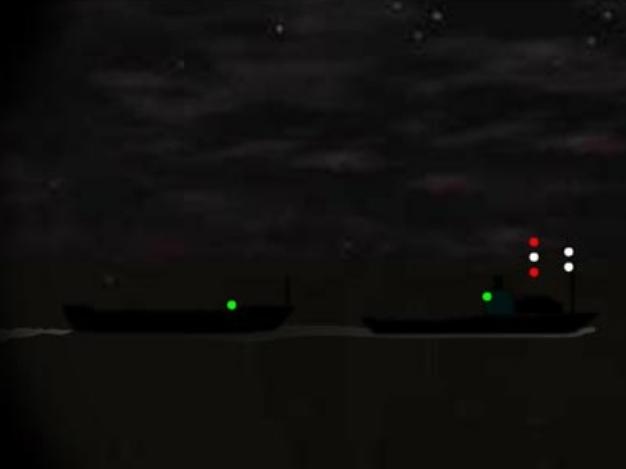
    Code: HNXE You are on a power-driven vessel underway in open water. You sight these lights on the port bow, on a steady bearing. The distance is closing. What are you looking at and what action will you take in compliance with the International Regulations for Preventing Collision at Sea.
    Code: HNXE You are on a power-driven vessel underway in open water. You sight these lights on the port bow, on a steady
    • This is a power-driven vessel engaged in towing, less than 50 metres in length, length of tow under 200 metres and the tow, both being restricted in their ability to manoeuvre, seen from the starboard side. Under rule 18, I am required to keep clear and will take appropriate avoiding action.
    • This is a power-driven vessel, more than 50 metres in length or less than 50 metres in length and showing a second masthead light, restricted in her ability to manoeuvre. The sidelight of a second vessel can be seen beyond her. Under rule 18, I am obliged to keep clear of the first vessel and will therefore take appropriate avoiding action.
    • This is a power-driven vessel engaged in towing, more than 50 metres in length or less than 50 metres in length and showing a second masthead light, length of tow 200 metres or more, not under command. I will keep clear under rule 27.
    • I don't know.

Preview — 5 of 160 questions

You are seeing the first 5 questions with answers. Unlock the remaining 155 to study the whole test — online or offline.

About this CES test

Navigation (NA) is a CES test for the Deck department at Operational level with 160 questions and verified answers. Common topics include: officer watch, hear signal, international regulations, compass error, open water, voyage plan, power-driven underway, high pressure.

You can practise the free questions online — one at a time, with the correct answer — or unlock the whole test and download it to study offline, without internet.

Related CES tests